

Description
Description
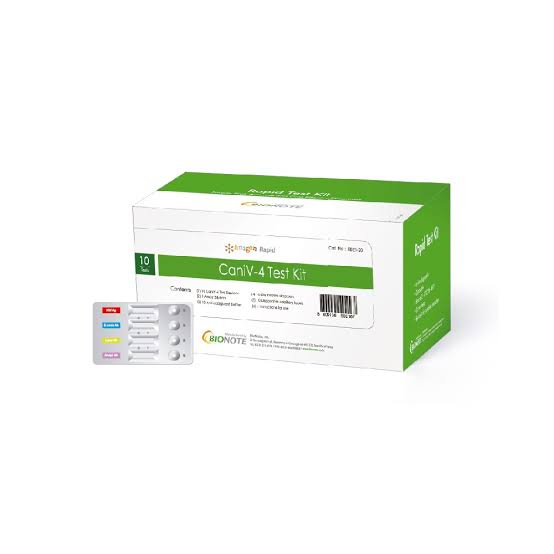
The BIONOTE Anigen Rapid CaniV-4 Test Kit is a veterinary rapid diagnostic test designed for the simultaneous detection of four important canine vector-borne disease markers.
Using an immunochromatographic assay, the test detects:
- Dirofilaria immitis antigen — Heartworm
- Ehrlichia canis antibody — Ehrlichiosis
- Borrelia burgdorferi antibody — Lyme disease
- Anaplasma phagocytophilum / Anaplasma platys antibodies — Anaplasmosis
The test can be performed using canine whole blood, serum, or plasma, making it suitable for veterinary clinics and diagnostic screening.
Its four-target format allows veterinarians to screen for multiple vector-borne disease markers using a single test device, helping streamline routine canine diagnostic workups.
Key Features
- 4-in-1 canine vector-borne disease screening
- Detects Heartworm, Ehrlichia, Lyme disease, and Anaplasma markers
- Simultaneous detection of four targets
- Rapid immunochromatographic test
- Suitable for canine whole blood, serum, or plasma
- Easy visual result interpretation
- No dedicated analyzer required
- 10 tests per kit
- Storage at 2–30°C
- Designed for veterinary diagnostic use
What Does It Detect?
| Target | Marker Detected | Disease / Condition |
|---|---|---|
| Dirofilaria immitis | Antigen | Heartworm disease |
| Ehrlichia canis | Antibody | Canine ehrlichiosis |
| Borrelia burgdorferi | Antibody | Lyme disease |
| Anaplasma phagocytophilum / A. platys | Antibody | Canine anaplasmosis |
Important: The Anaplasma component detects antibodies to A. phagocytophilum and/or A. platys and does not differentiate between the two species.
Product Specifications
| Specification | Details |
|---|---|
| Brand | BIONOTE |
| Product Name | Anigen Rapid CaniV-4 |
| Product No. | RC2120DD |
| Test Type | 4-in-1 canine vector-borne disease test |
| Method | Chromatographic / immunochromatographic assay |
| Animal | Dog |
| Specimens | Whole blood, serum, plasma |
| Targets | D. immitis Ag, E. canis Ab, B. burgdorferi Ab, Anaplasma Ab |
| Testing Time | Approximately 15 minutes |
| Pack Size | 10 Tests/Kit |
| Storage | 2–30°C |
| Intended Use | Veterinary diagnostic use |
BIONOTE's current product page lists RC2120DD, 10 Tests/Kit, and storage at 2–30°C. BIONOTE's product catalog lists the standard CaniV-4 testing time as 15 minutes.
Sample Types
The test can be used with:
- Canine whole blood
- Canine serum
- Canine plasma
For whole blood, the manufacturer's IFU specifies using the supplied anticoagulant tube.
General Test Procedure
- Collect the appropriate canine blood sample.
- Add 20 µL of whole blood, or 10 µL of serum/plasma, to the sample hole using the appropriate supplied capillary tube or micropipette.
- Add 2 drops of assay diluent.
- Allow the sample to migrate through the test window.
- Interpret the results at approximately 15 minutes.
- Do not interpret results outside the manufacturer's specified reading time.
Result Interpretation
The test contains control and test lines for the different disease markers.
Negative:
Only the appropriate control line appears for the tested area.
Positive:
The control line and corresponding test line appear, indicating detection of the respective antigen or antibody.
Invalid:
If the required control line does not appear, the result is invalid and the test should be repeated using a new device.
A positive antibody result indicates the presence of antibodies and should be interpreted together with the dog's clinical history and other laboratory findings.
Kit Contents
For the 10 Tests/Kit configuration, the manufacturer's IFU lists:
- 10 × Anigen Rapid CaniV-4 test devices
- Assay diluent
- 10 × anticoagulant tubes
- 10 × disposable capillary tubes
- Instructions for Use
Storage & Handling
- Store at 2–30°C
- Do not freeze
- Keep away from excessive heat and humidity
- Remove the test device from the foil pouch immediately before use
- Do not reuse test components
- Check the expiration date before use
- Follow the manufacturer's current Instructions for Use
Important Diagnostic Note
CaniV-4 is a screening/diagnostic aid, and results should not be used as the sole basis for a definitive clinical diagnosis. BIONOTE's IFU notes that questionable results may require additional clinical and/or laboratory testing and that final diagnosis should be made by a veterinarian after evaluating all relevant findings.