

Description
Description
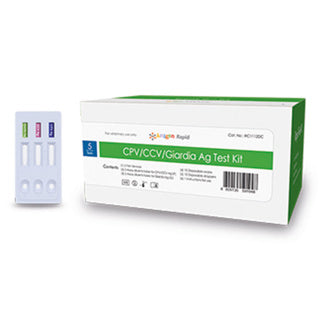
The BIONOTE Anigen Rapid CPV/CCV/Giardia Ag Test Kit is a 3-in-1 rapid diagnostic test designed for the simultaneous detection of three important causes of gastrointestinal disease in dogs: Canine Parvovirus (CPV), Canine Coronavirus (CCV), and Giardia antigen.
The test uses immunochromatographic assay technology and is performed using a canine fecal sample. It provides a convenient method for veterinary professionals to screen for these pathogens during the clinical evaluation of dogs presenting with gastrointestinal signs.
The combination of CPV, CCV, and Giardia testing in one kit can assist veterinarians with differential diagnosis when infectious causes of diarrhea or enteritis are suspected.
BIONOTE specifies a testing time of approximately 5–10 minutes, with canine feces as the specimen type.
Key Features
- 3-in-1 veterinary rapid test
-
Simultaneous detection of:
- Canine Parvovirus (CPV) antigen
- Canine Coronavirus (CCV) antigen
- Giardia antigen
- Designed for dogs
- Uses fecal samples
- Results in approximately 5–10 minutes
- Immunochromatographic assay
- One-step testing procedure
- Designed for convenient veterinary clinical use
- No additional laboratory equipment required
- Helps support differential diagnosis of infectious gastrointestinal disease
BIONOTE specifically describes simultaneous detection of CPV, CCV and Giardia and a one-step testing procedure.
What Does It Detect?
CPV – Canine Parvovirus
Detects Canine Parvovirus antigen, a major viral cause of acute gastrointestinal disease in dogs.
CCV – Canine Coronavirus
Detects Canine Coronavirus antigen, which can be associated with gastrointestinal disease in dogs.
Giardia
Detects Giardia antigen in canine feces. BIONOTE's promotional material identifies the target as G. duodenalis.
Product Specifications
| Specification | Details |
|---|---|
| Brand | BIONOTE |
| Product Line | Anigen Rapid |
| Product Name | Rapid CPV/CCV/Giardia Ag |
| Product Type | Veterinary Rapid Diagnostic Test |
| Product No. | RC1112DC |
| Species | Dog |
| Sample | Canine feces |
| Targets | CPV, CCV & Giardia antigen |
| Test Method | Immunochromatographic assay |
| Testing Time | Approximately 5–10 minutes |
| Storage | 2–30°C |
| Pack Size | 5 Tests/Kit |
| Intended User | Veterinary professionals |
BIONOTE's official product page lists RC1112DC, 5 Tests/Kit and storage at 2–30°C.
Kit Contents
According to BIONOTE's product brochure, the kit includes:
- Anigen Rapid CPV/CCV/Giardia test devices
- Assay diluent tube for CPV/CCV Ag
- Assay diluent tube for Giardia Ag
- Disposable swabs
- Disposable droppers
How the Test Works
The test uses an immunochromatographic assay to detect the targeted antigens in canine fecal material.
General testing workflow:
- Collect an appropriate fecal sample using the supplied disposable swab.
- Prepare the sample using the appropriate supplied diluent.
- Mix the sample according to the manufacturer's Instructions for Use.
- Allow larger particles to settle.
- Use the supplied dropper to transfer the prepared sample to the test device.
- Read the results at the time specified in the manufacturer's instructions.
Always follow the current BIONOTE Instructions for Use supplied with the product for the exact procedure and result interpretation.
Result Interpretation
The test has separate detection areas for the three targets:
- CPV Ag
- CCV Ag
- Giardia Ag
A valid result requires the control line to appear. Positive results are indicated according to the relevant test line and should be interpreted according to the manufacturer's Instructions for Use.
Storage
Store at 2–30°C.
Do not use after the expiration date. Keep the kit stored according to the manufacturer's instructions.
Important Notes
- For veterinary diagnostic use.
- Intended for use with canine fecal samples.
- This is a qualitative antigen detection test.
- Test results should be interpreted by a qualified veterinarian together with the animal's clinical signs and other diagnostic findings.
- A single test result should not be used as the sole basis for a definitive diagnosis.
- If results are questionable, additional clinical or laboratory testing may be required.